At your service in Huntsville
Transfer Case Repair Huntsville
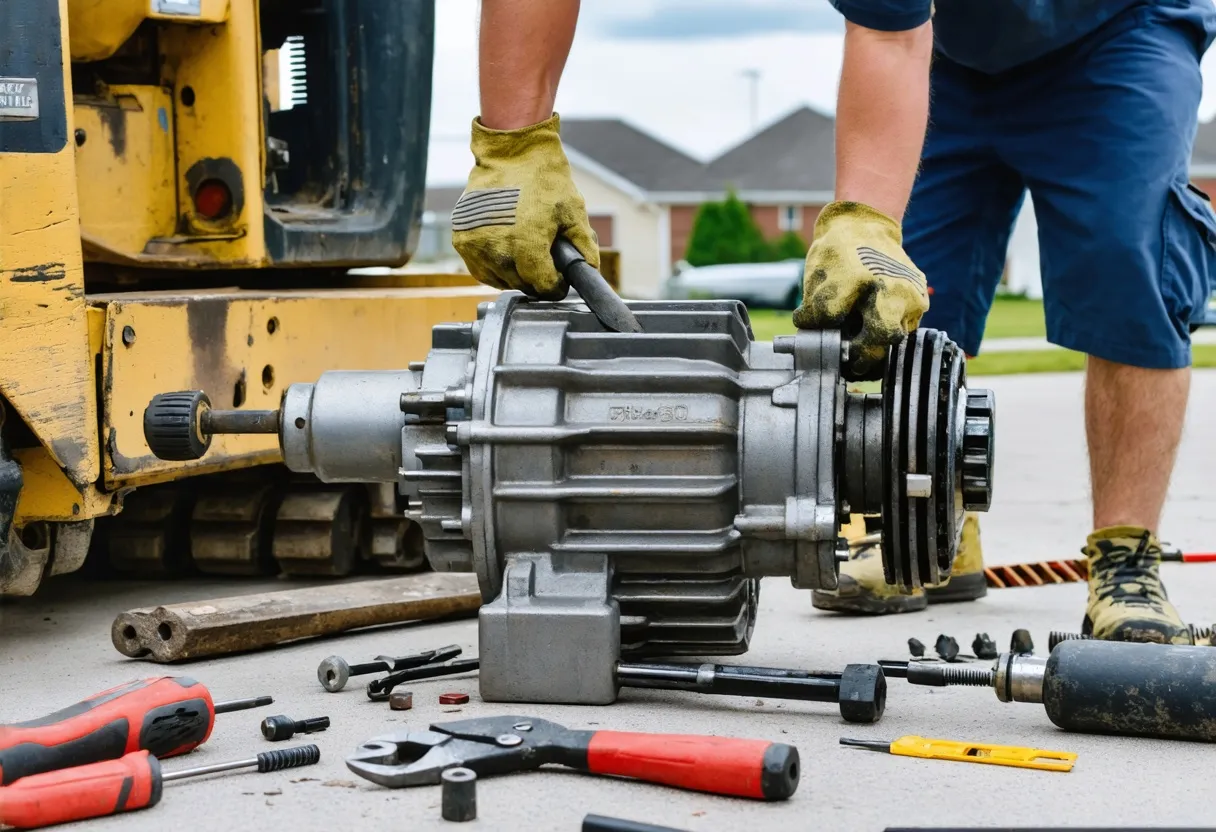
A transfer case doesn't usually fail without warning. It starts as a whine that comes and goes with speed, a clunk when you shift into four-wheel drive, or a moment where the dash light flashes and the vehicle just won't engage — and for Huntsville drivers who actually use their 4x4, that early warning tends to get ignored until the vehicle is stuck in one gear or leaking fluid in the driveway. Transfer case repair in Huntsville shouldn't mean guessing whether a shop is diagnosing the actual problem or defaulting to the most expensive fix because it's the easiest thing to quote.
None of this requires exotic diagnostic equipment or guesswork. Transfer case failure follows a handful of predictable mechanical patterns — fluid that was never changed, a chain that's stretched with mileage, bearings worn from years of load, or an electronic actuator that's simply reached the end of its service life — and an honest diagnostic identifies which one it is before quoting a repair, rather than defaulting to the most profitable answer.
This page is built around one job: getting a 4x4 or all-wheel-drive vehicle's transfer case correctly diagnosed — often the same day it comes in — and explaining, before any repair starts, what's driving the price and what's covered if the fix doesn't hold. Whether you're commuting the Parkway corridor, based out of South Huntsville, driving in from Madison, AL, or parked off Putman Drive NW most nights, the diagnostic and repair process below is the same one every vehicle goes through here.
We also cover 4x4 transfer case service on vehicles that just need routine fluid attention rather than repair — because catching a transfer case fluid service on schedule is usually the cheapest intervention you'll ever make on this part of the drivetrain.
01How Same-Day Transfer Case Diagnostics Work
A grinding noise on shift, a vehicle that won't come out of 4WD Low, or a dash light that refuses to clear all point the diagnostic in different directions, so the intake conversation focuses on exactly what the vehicle is doing, when it happens, and under what conditions — before it's even on the lift.
We drive the vehicle to reproduce the noise, hesitation, or shift failure rather than relying only on a description, since many transfer case symptoms only show up at certain speeds, temperatures, or specific drive-mode combinations.
Fluid condition, shift linkage or electronic actuator response, driveshaft angles, U-joints, and mounting hardware all get checked in the same visit, because a worn U-joint or a loose mount can produce noise and vibration close enough to a failing transfer case to fool anyone not specifically checking both systems.
You get the actual finding explained in plain language, a written price range for the repair, and a clear statement of which warranty tier applies to that specific job — all before we ask for approval to start work.
Once you approve the repair, we complete the work and take the vehicle back out on the road to confirm clean, quiet engagement across 2WD, 4WD High, and 4WD Low before handing the keys back.
02Signs Your Transfer Case Needs Attention, Not Just Your 4WD Button
03What Actually Drives Transfer Case Repair Pricing
There's no flat rate for "transfer case repair" because a routine transfer case fluid service and a full internal rebuild sit at opposite ends of a genuinely wide range, and quoting one number for both would be dishonest. A handful of factors move the price in a predictable direction, and we walk through each one with you before repair work begins — not after the invoice is written.
Chain-Driven vs. Gear-Driven Design
Chain-driven transfer cases stretch over time and mileage, which shows up as slack, clunking, or delayed engagement. Gear-driven units wear differently, developing chipped or worn tooth surfaces instead. The two designs are diagnosed and repaired differently, with different parts availability and labor time, so identifying which one is actually in your vehicle — not treating "transfer case" as a single generic part — sets the baseline for any estimate.
Manual Shift vs. Electronic Actuation
Older 4x4s often use a mechanical lever and a shift fork to physically engage the gears; many newer trucks and SUVs rely on an electronic actuator motor controlled from a dash button. A worn shift fork and a failed electronic actuator are different repairs entirely, and assuming the more expensive internal repair is automatically the right call — without testing whether the problem is isolated to the shift mechanism — is exactly the shortcut we test against before quoting anything.
What Teardown Actually Confirms
Some transfer case problems are visible from the outside: a leaking input or output seal, a dead actuator, a failed shift motor. Others only reveal themselves once the case is opened — worn internal bearings, a stretched chain, chipped gear teeth. We give you a price range based on the external diagnostic, and if teardown uncovers something the outside inspection couldn't have caught, we call before continuing rather than letting the number change quietly on the final invoice.
New vs. Remanufactured Parts
For many repairs, both new and remanufactured components are available, and the tradeoff is worth understanding before you decide. Remanufactured parts typically cost less and carry their own warranty terms; new parts may make more sense on a vehicle you plan to keep for years. We present both options where they genuinely apply rather than defaulting to whichever happens to be easier to order that week.
Labor Time and Vehicle Access
How easily a transfer case can be reached and removed varies significantly by make and model. Some designs allow the case to be serviced with the vehicle up on a lift and minimal disassembly; others require dropping additional components first, which adds labor time regardless of how straightforward the repair itself turns out to be. That labor time is priced against the specific vehicle in the bay, not a generic average across every 4x4 on the road.
Why Estimates Are Ranges, Not Fixed Quotes
A price range reflects the reality that some variables — internal wear that's only visible once the case is opened, or parts availability for less common vehicles — can't be fully confirmed until the diagnostic, and in some cases the teardown, is complete. A range grounded in what we've actually inspected is more honest than a single number that has to be revised upward later.
Related Drivetrain Work
A transfer case rarely fails in complete isolation. Worn U-joints, a leaking differential seal, or a loose transmission or transfer case mount often turn up during the same inspection, and addressing them in the same visit typically costs less in combined labor than two separate appointments — but that recommendation only comes if the inspection actually finds a real issue, not because the vehicle happens to already be on the lift.
04A Warranty You Can Read Before You Sign
Every transfer case repair leaves with a written warranty tier attached to that specific job, explained before you approve the work — not a vague promise buried in fine print after the fact. If a covered repair fails within its warranty period, the repair itself is what's covered, not just a discount toward a second bill, and we'll tell you plainly if a repair falls outside coverage rather than let you assume otherwise.
05Transfer Case Questions Huntsville Drivers Ask Before They Book
For most symptom-based visits, yes. A road test, fluid check, and inspection of the shift mechanism and related drivetrain components can usually be completed the same day, which is enough to give you a written price range and identify which warranty tier applies. A full internal teardown for gear, chain, or bearing repair is typically scheduled as a separate step once you've approved the estimate, since that work takes longer than the diagnostic itself.
Short distances at low speed generally won't cause immediate additional damage, but driving any real distance stuck in 4WD Low puts extra strain on the driveline and can turn a repairable transfer case into a full replacement. If you're coming from Madison or off Putman Drive NW and the vehicle won't come out of 4WD Low, call ahead so we can talk through whether a tow makes more sense than driving it in.
They're two separate systems with separate fluid specifications and separate service intervals. Using the wrong fluid type — or assuming a transmission fluid service also covers the transfer case — accelerates internal wear even when the fluid level looks correct, which is why we check both independently rather than treating one as a substitute for the other.
Yes. The two designs fail differently and get inspected differently, and identifying which one your specific vehicle uses is one of the first things confirmed during the diagnostic, before any discussion of repair options.
That happens more often than most drivers expect, and it's exactly why the diagnostic checks the whole drivetrain rather than jumping straight to the most expensive assumption. Paying for transfer case work when the actual problem is a far less expensive U-joint or mount is the kind of mistake a full inspection is designed to prevent.
Calling ahead helps us have a bay ready and gives us a head start on what to check based on your symptom description, which is part of what makes same-day diagnosis realistic in the first place. Walk-ins are handled as capacity allows, but a quick call first, especially if you're driving in from Madison or the Parkway corridor, gets you seen faster.
064x4 Transfer Case Service and Drivetrain Repair Across Huntsville and Madison
4x4 transfer case service and broader drivetrain repair are a specific, focused part of what a transmission shop does — and it's the part that gets rushed at general repair shops that treat it as a sideline between oil changes and brake jobs. We work on transfer cases and the connected drivetrain components — driveshafts, U-joints, differentials, mounts — for drivers throughout Huntsville and the surrounding area, as core, everyday work rather than an occasional job.
That includes daily commuters running Memorial Parkway (Memorial Pkwy SW/NW) in both directions during the morning and evening push, work trucks and SUVs based in South Huntsville, drivers coming in from Madison, AL, and vehicles parked most nights off Putman Drive NW. If your 4x4 sees regular use towing, hauling job-site equipment, or switching in and out of four-wheel drive daily, the wear pattern on the transfer case looks different than a vehicle that only engages 4WD a handful of times a year — and that use history is part of what we factor into the diagnostic, not just the specific symptom you called about.
Fluid service intervals shift with how a vehicle is actually used in this area, too. A truck that regularly tows along the Parkway corridor or spends time off-pavement wears its transfer case fluid faster than one that mostly sees flat, steady commuting. We check fluid condition against how the vehicle is actually driven rather than applying one blanket interval to every 4x4 that comes through the door — a transfer case fluid service that's overdue is often the cheapest fix available if it's caught before bearing or gear wear sets in.
Local also means practical logistics when a transfer case fails badly enough that driving isn't safe. If you're stuck in 4WD Low near South Huntsville, dealing with a rapid fluid leak on the Parkway corridor, or unable to safely make the drive in from Madison, we can help coordinate getting the vehicle to the shop rather than leaving you to figure that out alone. Call ahead before arranging a tow so we know the vehicle is coming and can start the inspection the same day it arrives instead of letting it sit in a queue.
Being a shop that focuses specifically on transmission and drivetrain repair — rather than treating a transfer case complaint as one line item among dozens — is also why the pricing and warranty explanations on this page apply consistently, whether the vehicle in the bay is a work truck off Putman Drive NW or a daily driver commuting in from Madison, AL.
Request Your Quote
Free, itemized, and no pressure to move forward.
Get An Itemized Quote
See exactly what a repair would cost before you decide anything.